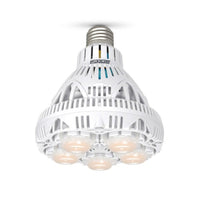

Give Your Indoor Garden the Right Light to Thrive
Indoor gardeners like you know light makes the difference. Sansi LED grow lights deliver a balanced full spectrum that supports photosynthesis, firmer stems, fuller leaves and brighter blooms. This guide explains benefits, wattage selection and simple setup tips for a flourishing indoor garden.
Modern LEDs are reshaping indoor crop production.
What are Sansi LED grow lights — and how do they help your indoor plants?
Sansi LED grow lights mimic sunlight with a balanced full spectrum tailored to growth stages, supporting photosynthesis while using less power than older lamps.
In short, LEDs offer greater efficiency and finer control over plant lighting.
How does full-spectrum light improve photosynthesis?

Full spectrum provides the blue and red bands plants use for photosynthesis, while green light improves canopy penetration. Blue encourages compact growth and red supports flowering; a balanced Sansi spectrum promotes even development and vigour.
Understanding wavelength roles helps fine‑tune light for plant form.
Tuning the spectrum and intensity allows you to influence plant growth and yields, offering precise control from seedling to harvest.
Being able to tune both spectrum and intensity is a standout advantage of modern LED systems.
Precise light control gives you a practical tool to steer development and boost yields.
Why are Sansi grow lights energy efficient and dependable?
Sansi use efficient diodes that draw less power and emit less heat, lowering running costs. Robust construction makes them dependable for long-term indoor use.
Which Sansi grow light wattage fits your plants?
Choose wattage by plant size and growth stage; ensure even intensity across your layout so every plant receives consistent light.
Choosing wattage for seedlings and small plants
Use low‑power fixtures like the SANSI 15W grow light for seedlings to avoid overheating and encourage compact growth.
Wattage for medium to large houseplants
Medium and large plants often need higher output, such as the SANSI 36W grow light for vegetative growth and flowering; position fixtures to avoid shading.
How to set up and use Sansi grow lights for best results in Australia
A reliable setup and consistent schedule improve results; follow straightforward practices for best performance.
Best installation practices for Sansi LEDs

Mount lights about 30–60 cm above the canopy, space fixtures evenly, raise lights as plants grow and ensure airflow to prevent heat buildup.
Daily lighting schedules by growth stage
Seedlings: 14–16 hours; mature plants: 12–14 hours. Use a timer and adjust if plants show stress or stretching.
What Australian growers say about Sansi grow lights
Growers report stronger growth and reliable performance across setups and plant types.
Results customers report with Sansi lights
Many customers notice faster growth, denser foliage and more vivid blooms after switching to Sansi.
How Sansi compares to other brands in Australia
Sansi is praised for energy efficiency, steady output and durable construction compared with other brands.
| Wattage | Suitable For | Key Benefits |
|---|---|---|
| 15W | Seedlings | Gentle light for young plants; lowers overheating risk |
| 36W | Medium to large plants | Supports strong vegetative growth and flowering |
| 50W | Larger setups | Provides intense light for bigger indoor gardens |
Choose the right wattage, maintain suggested heights and run steady schedules for healthier, more vigorous plants.
Frequently Asked Questions
What are the advantages of using full-spectrum LED grow lights?
Full-spectrum LEDs mimic sunlight, support all growth stages, improve photosynthesis and yields while using less energy than older lamps.
How do I know which wattage is best for my specific plants?
Match wattage to plant size and stage: use lower wattage for seedlings and higher output for larger plants.
Can I use Sansi grow lights for different types of indoor gardening setups?
Yes. They suit soil, hydroponic and aquaponic setups thanks to efficient full‑spectrum output.
What maintenance is required for Sansi LED grow lights?
Dust fixtures, ensure ventilation and check connections; replace units that flicker or dim.
How can I troubleshoot issues with my plants under Sansi lights?
Check light distance, intensity and schedule; also review temperature and humidity to resolve common issues.
Are Sansi grow lights suitable for all indoor plant types?
They support herbs, leafy greens and most flowering species; match spectrum and wattage to each plant’s needs.
What is the expected lifespan of Sansi LED grow lights?
Designed for long service life, with many models offering extended use when cared for correctly.
What types of plants thrive best under Sansi LED grow lights?
Herbs, leafy greens and most flowering plants perform well; high‑light crops like tomatoes and peppers benefit most.
How do I adjust the lighting schedule for different plant growth stages?
Use about 14–16 hours for seedlings and 12–14 hours for mature plants; keep cycles consistent with a timer.
Can Sansi grow lights be used in a greenhouse environment?
Yes — they can supplement natural light in greenhouses when fixtures are protected from moisture and weather.
What are the energy savings associated with using Sansi LED grow lights?
Sansi LEDs consume substantially less power than many traditional grow lamps, lowering electricity and replacement costs.
How do I clean and maintain my Sansi grow lights?
Dust regularly, ensure ventilation to avoid heat buildup, and inspect electrical connections periodically.
What should I do if my plants show signs of stress under Sansi lights?
Check distance, fixture intensity and schedule first; small height or timing adjustments often correct yellowing or legginess.
Are Sansi grow lights suitable for hydroponic systems?
Yes — they perform well in small home hydroponics and larger commercial setups thanks to efficient full‑spectrum output.
Which plants get the most from Sansi LED grow lights?
Herbs, leafy greens, tomatoes, peppers and many flowering plants benefit from the full spectrum.
How many hours a day should I run the Sansi grow lights?
Seedlings: ~14–16 hours; mature plants: ~12–14 hours. Use a timer and adjust based on plant response.
Can I use Sansi grow lights outdoors?
They’re designed for indoor use but can supplement sheltered outdoor areas if protected from moisture and weather.
How long do Sansi LED grow lights last?
Models are designed for long service life, offering extended use when cared for correctly.
Are Sansi grow lights suitable for every indoor setup?
Yes — they scale from small home setups to larger hydroponic systems and commercial grows due to efficient output.
How can I tell if my plants are getting enough light from Sansi LEDs?
Adequate light shows compact growth, new leaves and healthy flowering. Leggy stems, pale leaves or slowed growth indicate insufficient light; measure canopy intensity for precision.